
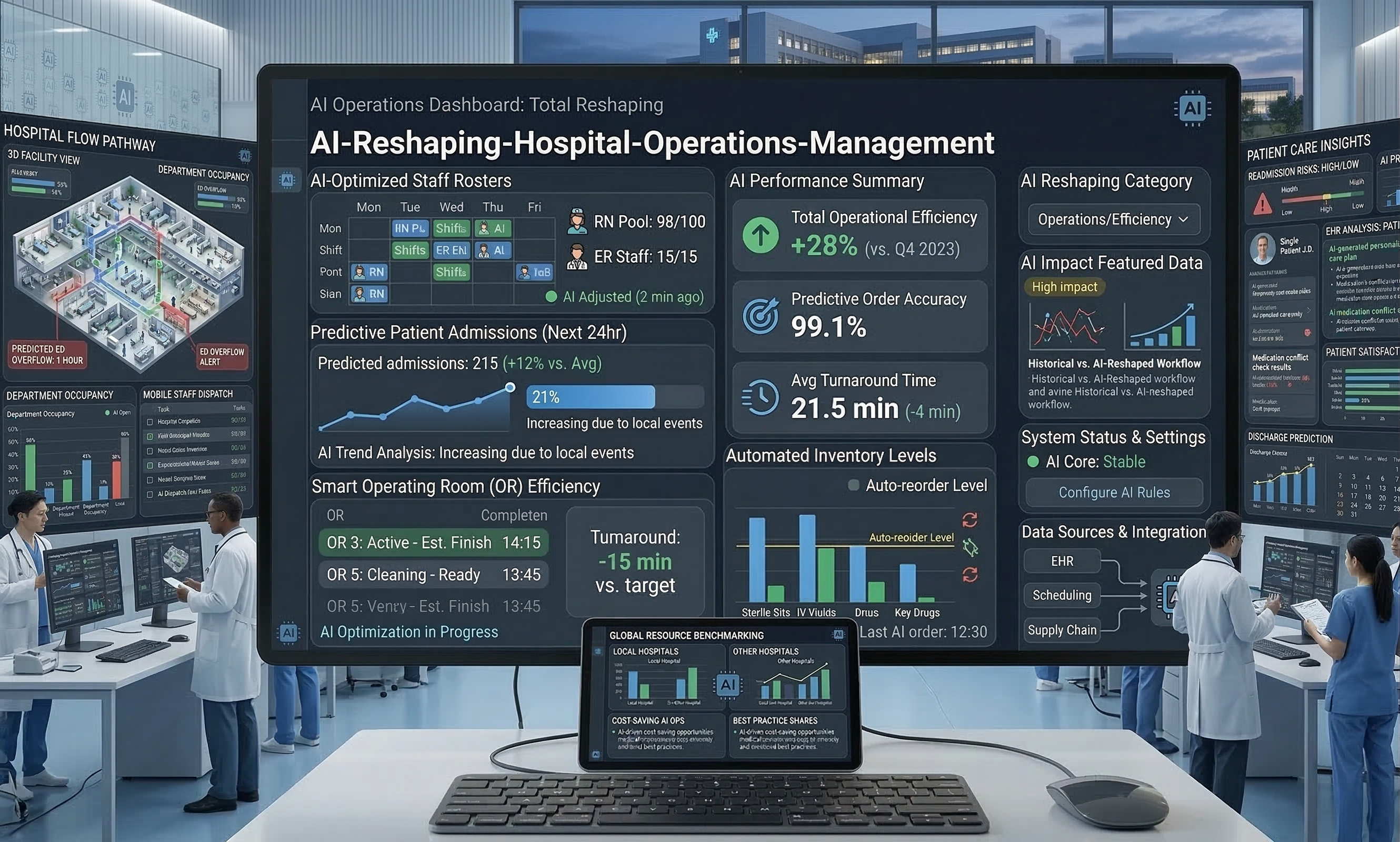
In the intricate ecosystem of modern healthcare, hospitals operate at a scale and complexity few industries can match. From managing thousands of patient appointments and intricate clinical workflows to optimizing resource allocation and ensuring regulatory compliance, the demands on hospital administrators are immense. Historically, these challenges have been tackled with a blend of human expertise, established protocols, and often, reactive measures. However, a powerful new ally is emerging, fundamentally transforming how these institutions are managed: Artificial Intelligence (AI).
AI is no longer a futuristic concept confined to sci-fi; it's a practical, transformative force already making significant inroads into healthcare operations. For hospital administrators, clinic managers, and healthcare IT professionals, understanding and leveraging AI is no longer optional – it's essential for building a more efficient, patient-centric, and financially robust future. At MedCueAI, we're at the forefront of integrating these intelligent capabilities into our premium Hospital Management Systems (HMS) and Clinic Management Systems (CMS).
Optimizing Operational Efficiency with AI
The heartbeat of any successful hospital lies in its operational efficiency. AI provides an unprecedented ability to analyze vast datasets, identify patterns, and make predictions that drastically improve how resources are utilized.
Predictive Analytics for Resource Allocation
- Staffing Optimization: AI algorithms can forecast patient admissions, discharges, and specific departmental needs with remarkable accuracy. This allows hospitals to optimize nurse-to-patient ratios, physician scheduling, and support staff deployment, reducing burnout, improving care quality, and minimizing overtime costs. Imagine a system that predicts a surge in cardiology patients next Tuesday and proactively adjusts staffing levels.
- Bed Management: AI can analyze historical data on bed turnover, patient acuity, and admission patterns to predict bed availability. This minimizes bottlenecks in emergency departments, reduces patient wait times for admission, and ensures efficient use of critical resources like ICU beds.
- Equipment Utilization: By tracking the usage and maintenance needs of medical equipment, AI can schedule predictive maintenance, preventing costly breakdowns and ensuring critical devices are available when needed most.
Streamlining Supply Chain and Inventory Management
Supply chain inefficiencies can lead to costly waste, stockouts of essential items, and delays in patient care. AI revolutionizes this process by:
- Forecasting Demand: Analyzing historical consumption, patient volume, and even external factors like seasonal illness to predict future supply needs for everything from medications to sterile gloves.
- Automated Reordering: Integrating with suppliers to automate purchase orders when stock levels hit predetermined thresholds, ensuring critical supplies are always on hand without excessive inventory holding costs.
- Reducing Waste: Identifying slow-moving inventory or products nearing expiration, allowing for proactive measures to reduce waste and improve cost-effectiveness.
Enhancing Patient Flow and Experience
A positive patient experience is paramount. AI helps hospitals create smoother, more personalized journeys from initial contact to post-discharge follow-up.
Intelligent Appointment Scheduling and Triage
- Optimized Scheduling: AI can factor in physician availability, patient preferences, visit duration, and even travel time to create highly efficient appointment schedules, significantly reducing wait times and no-shows.
- AI-Powered Triage: For non-emergency situations, AI chatbots or virtual assistants can guide patients through an initial symptom assessment, directing them to the most appropriate level of care (e.g., primary care, specialist, urgent care, or emergency room), improving access and reducing unnecessary ER visits.
Personalized Patient Journeys and Communication
AI enables a level of personalization previously unimaginable, fostering greater patient engagement and satisfaction:
- Tailored Information: Delivering personalized educational materials, pre-visit instructions, and post-discharge care plans based on a patient's specific condition and health literacy.
- Proactive Reminders: Automated, intelligent reminders for appointments, medication adherence, and follow-up care, reducing missed appointments and improving treatment outcomes.
- Virtual Support: AI-powered virtual assistants can answer common patient questions 24/7, freeing up staff and providing immediate support.
Boosting Administrative Accuracy and Compliance
Administrative tasks, though often unseen by patients, are the backbone of a hospital's financial health and legal standing. AI offers robust solutions to enhance precision and ensure adherence to complex regulations.
Automated Revenue Cycle Management (RCM)
- Claims Processing & Coding: AI can analyze medical records and automate coding processes with high accuracy, minimizing errors that lead to claim denials or underpayments. It can also identify patterns in denied claims to improve future submissions.
- Fraud Detection: AI algorithms can flag suspicious billing patterns or potential fraudulent activities, safeguarding the hospital's financial integrity.
- Eligibility Verification: Expediting the patient eligibility and prior authorization process, reducing delays and administrative burden.
Regulatory Compliance and Risk Management
Navigating the labyrinth of healthcare regulations (like HIPAA, GDPR, etc.) is a constant challenge. AI can:
- Monitor Compliance: Continuously scan clinical documentation and operational processes to ensure adherence to regulatory guidelines, flagging potential violations before they become critical issues.
- Enhance Data Security: AI-driven cybersecurity solutions can detect and respond to threats in real-time, protecting sensitive patient data.
- Identify Operational Risks: Analyze incident reports, near misses, and other data to identify systemic risks and suggest preventative measures, improving patient safety and reducing liability.
Supporting Clinical Decision-Making (from an Operations Perspective)
While often associated directly with diagnosis and treatment, AI's role in clinical support also has profound operational implications.
Data-Driven Insights for Quality Improvement
AI can analyze vast amounts of clinical data to identify trends related to treatment effectiveness, infection rates, readmission causes, and adverse events. These insights are invaluable for:
- Developing Best Practices: Informing the creation of evidence-based clinical protocols that lead to better patient outcomes.
- Targeted Interventions: Identifying patient cohorts at higher risk for certain conditions or complications, allowing for proactive operational adjustments in care delivery.
- Performance Benchmarking: Enabling hospitals to compare their operational and clinical performance against national or regional benchmarks, driving continuous improvement efforts.
Staff Augmentation and Professional Development
AI tools can augment clinical staff by:
- Automating Documentation: AI-powered natural language processing (NLP) can transcribe clinical notes, auto-fill forms, and summarize patient encounters, significantly reducing the administrative burden on doctors and nurses, freeing them to focus on direct patient care.
- Personalized Training: Delivering AI-driven training modules that adapt to individual learning styles and skill gaps, ensuring staff are always up-to-date with the latest medical advancements and operational procedures.
The MedCueAI Advantage: Integrating Intelligence for Seamless Management
At MedCueAI, we understand that the true power of AI in healthcare management comes from seamless integration within a comprehensive system. Our premium Hospital Management Systems (HMS) and Clinic Management Systems (CMS) are designed with AI at their core. We leverage these advanced capabilities to provide a holistic platform that:
- Centralizes Data: Creating a unified source of truth across all departments.
- Automates Workflows: Streamlining everything from patient registration to discharge.
- Provides Actionable Insights: Empowering administrators and clinicians with real-time, AI-driven data to make informed decisions.
With MedCueAI, hospitals and clinics can transform fragmented processes into a cohesive, intelligent operation, paving the way for superior patient care and enhanced organizational efficiency.
Challenges and the Path Forward
While the benefits are clear, adopting AI in hospital management isn't without its considerations. Ensuring data privacy and security, addressing ethical concerns around algorithmic bias, and fostering a culture of human-AI collaboration are crucial. The future will involve even more sophisticated AI, capable of learning from vast, diverse datasets, performing hyper-personalized interventions, and even proactively identifying infrastructure issues before they arise.
Conclusion: A Smarter, Healthier Tomorrow
AI is more than just a technological upgrade; it's a paradigm shift in how hospitals are conceived, managed, and operated. By transforming everything from resource allocation and patient flow to administrative accuracy and clinical support, AI is empowering healthcare leaders to build more resilient, efficient, and compassionate institutions. The journey to a smarter, healthier future for healthcare starts now, with intelligent solutions like those offered by MedCueAI at the helm. Embrace the AI revolution and unlock the full potential of your healthcare facility.